
 [
[

-
内容大纲
本书以一种直观简洁的方式介绍了量子力学,作者独辟蹊径,避开那些繁琐晦涩的方程式来解释量子力学,这也是第一本抛开那些令人困惑的公理和基本原理来介绍量子理论的书籍,可帮助我们轻松理解这个深奥的主题。本书的核心内容是讲量子理论中的波,从目录中便可以看出这一点。书中包含很多原创的主题,作者带我们探究了与那些真正有所成就却未被认可的科学家们有关的原始历史资料和趣闻轶事,虽然这些科学家们并没有获得诺贝尔奖,但他们的成就可不容小觑。 -
作者介绍
约翰·P.拉尔斯顿(John P.Ralston)是堪萨斯大学物理学和天文学教授,拥有俄勒冈大学高能理论物理学博士学位 -
目录
Preface
Author biography
1 The continuum Universe
1.0.1 A cubic meter of space
1.0.2 The downside of successful advertising
1.0.3 The wrong use of x
1.0.4 The enemies of understanding
1.1 The right use of x: describing a continuum
1.1.1 The wave function describes the state
1.1.2 FIAQ
References
2 Everything is a wave
2.1 Waves in what medium: waves made of what stuff?
2.2 Evidence for waves
2.2.1 Do this experiment
2.2.2 La tache de Poisson, also called Arago's spot
2.2.3 Most photon waves are much larger than most atoms
2.3 Early clues to the size and nature of atoms
2.3.1 How to use the size of an atom
2.3.2 The aether came back!
2.3.3 FIAQ
References
3 There is no classical theory of matter
3.1 Earnshaw's no go theorem
3.1.1 Waves have no particular shape, unless they do
3.1.2 Complex waves
3.1.3 Wave numbers, wave vectors, plane waves
3.1.4 Photons and other waves are never localized at points
3.2 Fundamental constants without the kilogram
3.2.1 Mass ratios
3.2.2 The identity of energy and frequency
3.2.3 FIAQ
References
4 Matter waves
4.1 Your quantum governmental representative
4.2 A quantum device
4.3 Electricity is a quantum effect
4.4 The continuity equation
4.5 FIAQ
References
5 More quantumy experiments
5.1 The Franck-Hertz particle accelerator
5.2 The Davisson-Germer demonstration experiment
5.2.1 Matter waves tend to be small
5.3 The free space Schr6dinger equation
5.3.1 Interpreting the sign of the frequency
5.3.2 The memorized substitution rules
5.3.3 Don't add the wave functions of two electrons
5.3.4 FIAQ
References
6 Atoms are musical instruments
6.1 The quantum clues you never knew
6.1.1 Atomic spectra
6.1.2 The unknown history
6.1.3 The sound of every tune and no particular tune all at once
6.1.4 The quantum current
6.1.5 Light has the beat
6.2 The Schr6dinger equation
6.2.1 The artful mutilation of a theory
6.2.2 What interaction function?
6.2.3 FIAQ
References
7 Waves with known solutions
7.0.1 A general ansatz
7.0.2 The silver bullet: one rule to solve them all
7.1 The Schr6dinger equation
7.1.1 Expanding in complete orthonormal sets
7.1.2 What eigenvectors mean
7.1.3 The dogmatic eigenvalue equation
7.1.4 The time evolution operator
7.2 Solved models
7.2.1 Fundamental constants from hydrogen
7.2.2 Lessons from hydrogen
7.2.3 More about spherically symmetric systems
Reference
8 Observables
8.1 Collective position, velocity, and momentum: tropical storms
8.1.1 Collective velocity
8.1.2 A concept error about momentum
8.1.3 Velocity second moment
8.1.4 Collective position
8.1.5 The expected classical limit that failed
8.2 The general definition of observables
8.2.1 Collective wave momentum
8.2.2 Constants of the motion
8.2.30 bservability of the wave function
8.2.4 The uncertainty relation: never say 'principle'!
8.3 Logjam restrictions on observabies
8.3.1 FIAQ
References
9 More ways to describe waves
9.1 More than one description
9.1.1 Two ways to add waves
9.1.2 Superposition is not a quantum effect
9.1.3 The eigenstate expansion of observabies
9.1.4 Heisenberg picture
9.1.5 Comparing waves
9.1.6 The Born rule of quantum probability
9.1.7 Avoid bunk about disturbance of measurements
Reference
10 Entanglement
10.1 Sums of products are generic
10.1.1 The two wave electron-proton atom
10.2 Promoting operators, and other notation issues
10.2.1 The quantum interferometer
10.3 The Stern-Gerlach experiment
10.3.1 The relation of polarization and spin
10.3.2 Polarization observables
10.3.3 Many observables cannot be expressed with wave functions
10.3.4 Mott's particle detector and decoherence
10.4 Bell inequalities, EPR, and all that
10.4.1 A long and dirty turf war
10.4.2 The EPR allegory
10.4.3 Bell physics
10.4.4 Quantum probability is not defined by distributions
10.4.5 Something weird
10.5 Chapter summary
10.6 Suggested reading
References
编辑手记
同类热销排行榜
- 故宫日历(公历2017年)(精)26.4
- 时间简史(插图版)18
- 工程数学线性代数(第6版十二五普通高等教育本科国家级规划教材)7.76
- 昆虫记(精)/经典译林8.72
- 数控铣床综合实训教程19.2
- 昆虫记(插图典藏本)(精)11.2
- 化工制图习题集(普通高等教育规划教材)7.2
- 化工制图(普通高等教育规划教材)15.8
- 生命急救技能14
- 时间简史(普及版)(精)15.2
推荐书目
-

孩子你慢慢来/人生三书 华人世界率性犀利的一枝笔,龙应台独家授权《孩子你慢慢来》20周年经典新版。她的《...
-
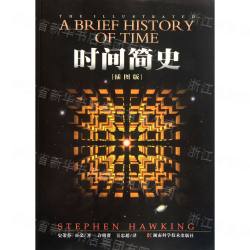
时间简史(插图版) 相对论、黑洞、弯曲空间……这些词给我们的感觉是艰深、晦涩、难以理解而且与我们的...
-

本质(精) 改革开放40年,恰如一部四部曲的年代大戏。技术突变、产品迭代、产业升级、资本对接...