
 [
[

-
内容大纲
本书讲述了粒子物理标准模型,第4版在提供先进粒子物理理论介绍的同时,纳入了大量的实验结果,使理论更为具象。从相对论量子力学到标准模型的前沿,该版对每一种理论均讨论了主要概念要点,并详细介绍了从第一原理出发的物理量的实际计算,且与实验结果进行了对比。为粒子物理标准模型中的三种规范理论提供了易理解且实用的介绍。有助于读者提高计算技能和物理洞察力。本书共分为2卷:
第1卷新增了相对论量子力学中的洛伦兹变换和离散对称性介绍,随着实验结果的更新,该版还在早期引入了马约拉纳费米子,使材料适合于相对论量子力学。
读者对象:物理学专业本科生和研究生。 -
作者介绍
-
目录
Preface
I Introductory Survey, Electromagnetism as a Gauge Theory, and Relativistic Quantum Mechanics
1 The Particles and Forces of the Standard Model
1.1 Introduction: the Standard Model
1.2 The fermions of the Standard Model
1.2.1 Leptons
1.2.2 Quarks
1.3 Particle interactions in the Standard Model
1.3.1 Classical and quantum fields
1.3.2 The Yukawa theory of force as virtual quantum exchange
1.3.3 The one-quantum exchange amplitude
1.3.4 Electromagnetic interactions
1.3.5 Weak interactions
1.3.6 Strong interactions
1.3.7 The gauge bosons of the Standard Model
1.4 Renormalization and the Higgs sector of the Standard Model
1.4.1 Renormalization
1.4.2 The Higgs boson of the Standard Model
1.5 Summary
Problems
2 Electromagnetism as a Gauge Theory
2.1 Introduction
2.2 The Maxwell equations: current conservation
2.3 The Maxwell equations: Lorentz covariance and gauge invariance
2.4 Gauge invariance (and covariance) in quantum mechanics .
2.5 The argument reversed: the gauge principle
2.6 Comments on the gauge principle in electromagnetism
Problems
3 Relativistic Quantum Mechanics
3.1 The Klein-Gordon equation
3.1.1 Solutions in coordinate space
3.1.2 Probability current for the KG equation
3.2 The Dirac equation
3.2.1 Free-particle solutions
3.2.2 Probability current for the Dirac equation
3.3 Spin
3.4 The negative-energy solutions
3.4.1 Positive-energy spinors
3.4.2 Negative-energy spinors
3.4.3 Dirac's interpretation of the negative-energy solutions of the Dirac equation
3.4.4 Feynman's interpretation of the negative-energy solutions of the KG and Dirac equations
3.5 Inclusion of electromagnetic interactions via the gauge principle: the Dirac prediction of g = 2 for the electron Problems
4 Lorentz Transformations and Discrete Symmetries
4.1 Lorentz transformations
4.1.1 The KG equation
4.1.2 The Dirac equation
4.2 Discrete transformations: P, C and T
4.2.1 Parity
4.2.2 Charge conjugation
4.2.3 CP
4.2.4 Time reversal
4.2.5 CPT
Problems
II Introduction to Quantum Field Theory
5 Quantum Field Theory I: The Free Scalar Field
5.1 The quantum field: (i) descriptive
5.2 The quantum field: (ii) Lagrange-Hamilton formulation
5.2.1 The action principle: Lagrangian particle mechanics
5.2.2 Quantum particle mechanics k la Heisenberg-Lagrange-Hamilton
5.2.3 Interlude: the quantum oscillator
5.2.4 Lagrange-Hamilton classical field mechanics
5.2.5 Heisenberg-Lagrange--Hamilton quantum field mechanics
5.3 Generalizations: four dimensions, relativity and mass
Problems
6 Quantum Field Theory II: Interacting Scalar Fields
6.1 Interactions in quantum field theory: qualitative introduction
6.2 Perturbation theory for interacting fields: the Dyson expansion
of the S-matrix
6.2.1 The interaction picture
6.2.2 The S-matrix and the Dyson expansion
6.3 Applications to the 'ABC' theory
6.3.1 The decay C - A + B
6.3.2 A + B - A B scattering: the amplitudes
6.3.3 A B --+ A B scattering: the Yukawa exchange mechanism, s and u channel processes
6.3.4 A + B A B scattering: the differential cross section
6.3.5 A B - A B scattering: loose ends
Problems
7 Quantum Field Theory III: Complex Scalar Fields, Dirac and Maxwell Fields; Introduction of Electromagnetic Interactions
7.1 The complex scalar field: global U(1) phase invariance, particles and antiparticles
7.2 The Dirac field and the spin-statistics connection
7.3 The Maxwell field A(x)
7.3.1 The classical field case
7.3.2 Quantizing A'(x)
7.4 Introduction of electromagnetic interactions
7.5 P, C and T in quantum field theory
7.5.1 Parity
7.5.2 Charge conjugation
7.5.3 Time reversal
Problems
III Tree-Level Applications in QED
8 Elementary Processes in Scalar and Spinor Electrodynamics
8.1 Coulomb scattering of charged spin-0 particles
8.1.1 Coulomb scattering of s+ (wavefunction approach)
8.1.2 Coulomb scattering of s+ (field-theoretic approach)
8.1.3 Coulomb scattering of s-
8.2 Coulomb scattering of charged spin- particles
8.3 e-s+ scattering
8.3.1 The amplitude for e-s+ - e-s+
8.3.2 The cross section for e-s+ - e-s+
8.4 Scattering from a non-point-like object: the pion form factor in e-Tr+ -+ e-r+
8.4.1 e- scattering from a charge distribution
8.4.2 Lorentz invariance
8.4.3 Current conservation
8.5 The form factor in the time-like region: e+e- -+ r+Tr- and crossing symmetry
8.6 Electron Compton scattering
8.6.1 The lowest-order amplitudes
8.6.2 Gauge invariance
8.6.3 The Compton cross section
8.7 Electron muon elastic scattering
8.8 Electron-proton elastic scattering and nucleon form factors
8.8.1 Lorentz invariance
8.8.2 Current conservation
Problems
9 Deep Inelastic Electron-Nucleon Scattering and the Parton Model
9.1 Inelastic electron-proton scattering: kinematics and structure functions
9.2 Bjorken scaling and the parton model
9.3 Partons as quarks and gluons
9.4 The Drell-Yan process
9.5 e+e- annihilation into hadrons
Problems
IV Loops and Renormalization
10 Loops and Renormalization I: The ABC Theory
10.1 The propagator correction in ABC theory
10.1.1 The O(g2) self-energy II[c2](q2)
10.1.2 Mass shift
10.1.3 Field strength renormalization
10.2 The vertex correction
10.3 Dealing with the bad news: a simple example
10.3.1 Evaluating H[](q2)
10.3.2 Reguiarization and renormalization
10.4 Bare and renormalized perturbation theory
10.4.1 Reorganizing perturbation theory
10.4.2 The O(g2h) renormalized self-energy revisited: how counter terms are determined by renormalization conditions
10.5 Renormalizability
Problems
11 Loops and Renormalization II: QED
11.1 Counter terms
11.2 The O(e2) fermion self-energy
11.3 The O(e2) photon self-energy
11.4 The O(e2) renormalized photon self-energy
11.5 The physics of 1=I[72] (q2)
11.5.1 Modified Coulomb's law
11.5.2 Radiatively induced charge form factor
11.5.3 The running coupling constant
11.5.4 1=I[72]'- in the s-channel
11.6 The O(e2) vertex correction, and Z1 = Z
11.7 The anomalous magnetic moment and tests of QED
11.8 Which theories are renormalizable - and does it matter?
Problems
A Non-relativistic Quantum Mechanics
B Natural Units
C Maxwell's Equations: Choice of Units
D Special Relativity: Invariance and Covariance
E Dirac J-Function
F Contour Integration
G Green Functions
H Elements of Non-relativistic Scattering Theory
H.1 Time-independent formulation and differential cross section .
H.2 Expression for the scattering amplitude: Born approximation
H.3 Time-dependent approach
I The SchrSdinger and Heisenberg Pictures
J Dirac Algebra and Trace Identities
J.1 Dirac algebra
J.1.1 V matrices
J.1.2 V5 identities
J.1.3 Hermitian conjugate of spinor matrix elements
J.1.4 Spin sums and projection operators
J.2 Trace theorems
K Example of a Cross Section Calculation
K.1 The spin-averaged squared matrix element
K.2 Evaluation of two-body Lorentz-invariant phase space in 'laboratory' variables
L Feynman Rules for Tree Graphs in QED
L.1 External particles
L.2 Propagators
L.3 Vertices
References
Index
同类热销排行榜
- 故宫日历(公历2017年)(精)26.4
- 时间简史(插图版)18
- 工程数学线性代数(第6版十二五普通高等教育本科国家级规划教材)7.76
- 昆虫记(精)/经典译林8.72
- 数控铣床综合实训教程19.2
- 昆虫记(插图典藏本)(精)11.2
- 化工制图习题集(普通高等教育规划教材)7.2
- 化工制图(普通高等教育规划教材)15.8
- 生命急救技能14
- 时间简史(普及版)(精)15.2
推荐书目
-

孩子你慢慢来/人生三书 华人世界率性犀利的一枝笔,龙应台独家授权《孩子你慢慢来》20周年经典新版。她的《...
-
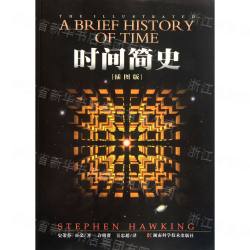
时间简史(插图版) 相对论、黑洞、弯曲空间……这些词给我们的感觉是艰深、晦涩、难以理解而且与我们的...
-

本质(精) 改革开放40年,恰如一部四部曲的年代大戏。技术突变、产品迭代、产业升级、资本对接...