
 [
[

-
内容大纲
The main focus of the second volume of this fourth edition,as in the third,is on the two non-Abelian quantum gauge field theories of the Standard Model -that is,QCD and the electroweak theory of Glashow,Salam and Weinberg,We preserve the same division into four parts: non-Abelian symmetries,both global and local; QCD and the renormalization group; spontaneously broken symmetry; and weak interaction phenomenology and the electroweak theory.
However,the book has always combined theoretical development with dis-cussion of relevant experimental results. And it is on the experimental side that most progress has been made in the ten years since the third edition appeared-first of all,in the study of CP violation in B-meson physics,and in neutrino oscillations. The inclusion of these results,and the increasing im-portance of the topics,have required some reorganization,and a new chapter (21) devoted wholly to them. We concentrate mainly on CP violation in B-meson decays,particularly on the determination of the angles of the unitarity triangle from B-meson oscillations. CP-violation in K-meson systems is also discussed. In the neutrino sector,we describe some of the principal experi-ments which have led to our current knowledge of the mass-squared differences and the mixing angles. In discussing weak interaction phenomenology,we keep in view the possibility that neutrinos may turn out to be Majorana particles,an outcome for which we have prepared the reader in (new) chapters 4 and 7 of volume 1. -
作者介绍
-
目录
Preface
V Non-Abelian Symmetries
12 Global Non-Abelian Symmetries
12.1 The Standard Model
12.2 The flavour symmetry SU(2)f
12.2.1 The nucleon isospin doublet and the group SU(2)
12.2.2 Larger (higher-dimensional) multiplets of SU(2) in nuclear physics
12.2.3 Isospin in particle physics: flavour SU(2)f
12.3 Flavour SU(3)f
12.4 Non-Abelian global symmetries in Lagrangian quantum field theory
12.4.1 SU(2)f and SU(3)f
12.4.2 Chiral symmetry
Problems
13 Local Non-Abelian (Gauge) Symmetries
13.1 Local SU(2) symmetry
13.1.1 The covariant derivative and interactions with matter
13.1.2 The non-Abelian field strength tensor
13.2 Local SU(3) Symmetry
13.3 Local non-Abelian symmetries in Lagrangian quantum field
theory
13.3.1 Local SU(2) and SU(3) Lagrangians
13.3.2 Gauge field self-interactions
13.3.3 Quantizing non-Abelian gauge fields
Problems
VI QCD and the Renormalization Group
14 QCD I: Introduction, Tree Graph Predictions, and Jets
14.1 The colour degree of freedom
14.2 The dynamics of colour
14.2.1 Colour as an SU(3) group
14.2.2 Global SU(3)c invariance, and 'scalar gluons'
14.2.3 Local SU(3)o invariance: the QCD Lagrangian
14.2.4 The θ-term
14.3 Hard scattering processes, QCD tree graphs, and jets
14.3.1 Introduction
14.3.2 Two-jet events in pp collisions
14.3.3 Three-jet events in pp collisions
14.4 3-jet events in e+e- annihilation
14.4.1 Calculation of the parton-level cross section
14.4.2 Soft and collinear divergences
14.5 Definition of the two-jet cross section in e+e- annihilation
14.6 Further developments
14.6.1 Test of non-Abelian nature of QCD in e+e- → 4 jets.
14.6.2 Jet algorithms
Problems
15 QCD II: Asymptotic Freedom, the Renormalization Group, and Scaling Violations
15.1 Higher-order QCD corrections to a(e+e- --+ hadrons): large
logarithms
15.2 The renormalization group and related ideas in QED
15.2.1 Where do the large logs come from?
15.2.2 Changing the renormalization scale
15.2.3 The RGE and large _q2 behaviour in QED
15.3 Back to QCD: asymptotic freedom
15.3.1 One loop calculation
15.3.2 Higher-order calculations, and experimental comparison
15.4 σ(e+e- → hadrons) revisited
15.5 A more general form of the RGE: anomalous dimensions and running masses
15.6 QCD corrections to the parton model predictions for deep inelastic scattering: scaling violations
15.6.1 Uncancelled mass singularities at order as
15.6.2 Factorization, and the order α8 DGLAP equation
15.6.3 Comparison with experiment
Problems
16 Lattice Field Theory, and the Renormalization Group Revisited
16.1 Introduction
16.2 Discretization
16.2.1 Scalar fields
16.2.2 Dirac fields
16.2.3 Gauge fields
16.3 Representation of quantum amplitudes
16.3.1 Quantum mechanics
16.3.2 Quantum field theory
16.3.3 Connection with statistical mechanics
16.4 Renormalization, and the renormalization group, on the lattice
16.4.1 Introduction
16.4.2 Two one-dimensional examples
16.4.3 Connections with particle physics
16.5 Lattice QCD
16.5.1 Introduction, and the continuum limit
16.5.2 The static qq potential
16.5.3 Calculation of α(MZ 2)
16.5.4 Hadron masses
Problems
VII Spontaneously Broken Symmetry
17 Spontaneously Broken Global Symmetry
17.1 Introduction
17.2 The Fabri-Picasso theorem
17.3 Spontaneously broken symmetry in condensed matter physics
17.3.1 The ferromagnet
17.3.2 The Bogoliubov superfluid
17.4 Goldstone's theorem
17.5 Spontaneously broken global U(1) symmetry: the Goldstone model
17.6 Spontaneously broken global non-Abelian symmetry
17.7 The BCS superconducting ground state
Problems
18 Chiral Symmetry Breaking
18.1 The Nambu analogy
18.1.1 Two flavour QCD and SU(2)fL × SU(2)fR
18.2 Pion decay and the Goldberger-Treiman relation
18.3 Effective Lagrangians
18.3.1 The linear and non-linear a-models
18.3.2 Inclusion of explicit symmetry breaking: masses for pions and quarks
18.3.3 Extension to SU(3)fL × SU(3)fR
18.4 Chiral anomalies
Problems
19 Spontaneously Broken Local Symmetry
19.1 Massive and massless vector particles
19.2 The generation of 'photon mass' in a superconductor: Ginzburg-Landau theory and the Meissner effect
19.3 Spontaneously broken local U(1) symmetry: the Abelian Higgs model
19.4 Flux quantization in a superconductor
19.5 't Hooft's gauges
19.6 Spontaneously broken local SU(2) x U(1) symmetry
Problems
VIII Weak Interactions and the Electroweak Theory'.
20 Introduction to the Phenomenology of Weak Interactions
20.1 Fermi's 'current-current' theory of nuclear 3-decay, and its generalizations
20.2 Parity violation in weak interactions, and V-A theory
20.2.1 Parity violation
20.2.2 V-A theory: chirality and helicity
20.3 Lepton number and lepton flavours
20.4 The universal current × current theory for weak interactions of leptons
20.5 Calculation of the cross section for Vμ + e- → μ- + Ve
20.6 Leptonic weak neutral currents
20.7 Quark weak currents
20.7.1 Two generations
20.7.2 Deep inelastic neutrino scattering
20.7.3 Three generations
20.8 Non-leptonic weak interactions Problems
21 CP Violation and Oscillation Phenomena
21.1 Direct CP violation in B decays
21.2 CP violation in B meson oscillations
21.2.1 Time-dependent mixing formalism
21.2.2 Determination of the angles α(φ2) and β(φ1) of the unitarity triangle
21.3 CP violation in neutral K-meson decays
21.4 Neutrino mixing and oscillations
21.4.1 Neutrino mass and mixing
21.4.2 Neutrino oscillations: formulae
21.4.3 Neutrino oscillations: experimental results
21.4.4 Matter effects in neutrino oscillations
21.4.5 Further developments
Problems
22 The Glashow-Salam-Weinberg Gauge Theory of Electroweak Interactions
22.1 Difficulties with the current-current and 'naive' IVB models
22.1.1 Violations of unitarity
22.1.2 The problem of non-renormalizability in weak interactions
22.2 The SU(2) × U(1) electroweak gauge theory
22.2.1 Quantum number assignments; Higgs, W and Z masses
22.2.2 The leptonic currents (massless neutrinos): relation to current-current model
22.2.3 The quark currents
22.3 Simple (tree-level) predictions
22.4 The discovery of the W+ and Z0 at the CERN pp collider
22.4.1 Production cross sections for W and Z in pp colliders
22.4.2 Charge asymmetry in W± decay
22.4.3 Discovery of the W± and Z0 at the pp collider, and their properties
22.5 Fermion masses
22.5.1 One generation
22.5.2 Three-generation mixing
22.6 Higher-order corrections
22.7 The top quark
22.8 The Higgs sector
22.8.1 Introduction
22.8.2 Theoretical considerations concerning mH
22.8.3 Higgs boson searches and the 2012 discovery
Problems
M Group Theory
M.1 Definition and simple examples
M.2 Lie groups
M.3 Generators of Lie groups
M.4 Examples
M.4.1 SO(3) and three-dimensional rotations
M.4.2 SU(2)
M.4.3 SO(4): The special orthogonal group in four dimensions
M.4.4 The Lorentz group
M.4.5 SU(3)
M.5 Matrix representations of generators, and of Lie groups
M.6 The Lorentz group
M.7 The relation between SU(2) and SO(3)
N Geometrical Aspects of Gauge Fields
N.1 Covariant derivatives and coordinate transformations
N.2 Geometrical curvature and the gauge field strength tensor
O Dimensional Regularization
P Grassmann Variables
Q Feynman Rules for Tree Graphs in QCD and the Electroweak Theory
Q.1 QCD
Q.1.1 External particles
Q.1.2 Propagators
Q.1.3 Vertices
Q.2 The electroweak theory
Q.2.1 External particles
0.2.2 Propagators
Q.2.3 Vertices
References
Index
同类热销排行榜
- 故宫日历(公历2017年)(精)26.4
- 时间简史(插图版)18
- 工程数学线性代数(第6版十二五普通高等教育本科国家级规划教材)7.76
- 昆虫记(精)/经典译林8.72
- 数控铣床综合实训教程19.2
- 昆虫记(插图典藏本)(精)11.2
- 化工制图习题集(普通高等教育规划教材)7.2
- 化工制图(普通高等教育规划教材)15.8
- 生命急救技能14
- 时间简史(普及版)(精)15.2
推荐书目
-

孩子你慢慢来/人生三书 华人世界率性犀利的一枝笔,龙应台独家授权《孩子你慢慢来》20周年经典新版。她的《...
-
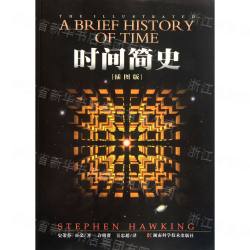
时间简史(插图版) 相对论、黑洞、弯曲空间……这些词给我们的感觉是艰深、晦涩、难以理解而且与我们的...
-

本质(精) 改革开放40年,恰如一部四部曲的年代大戏。技术突变、产品迭代、产业升级、资本对接...